
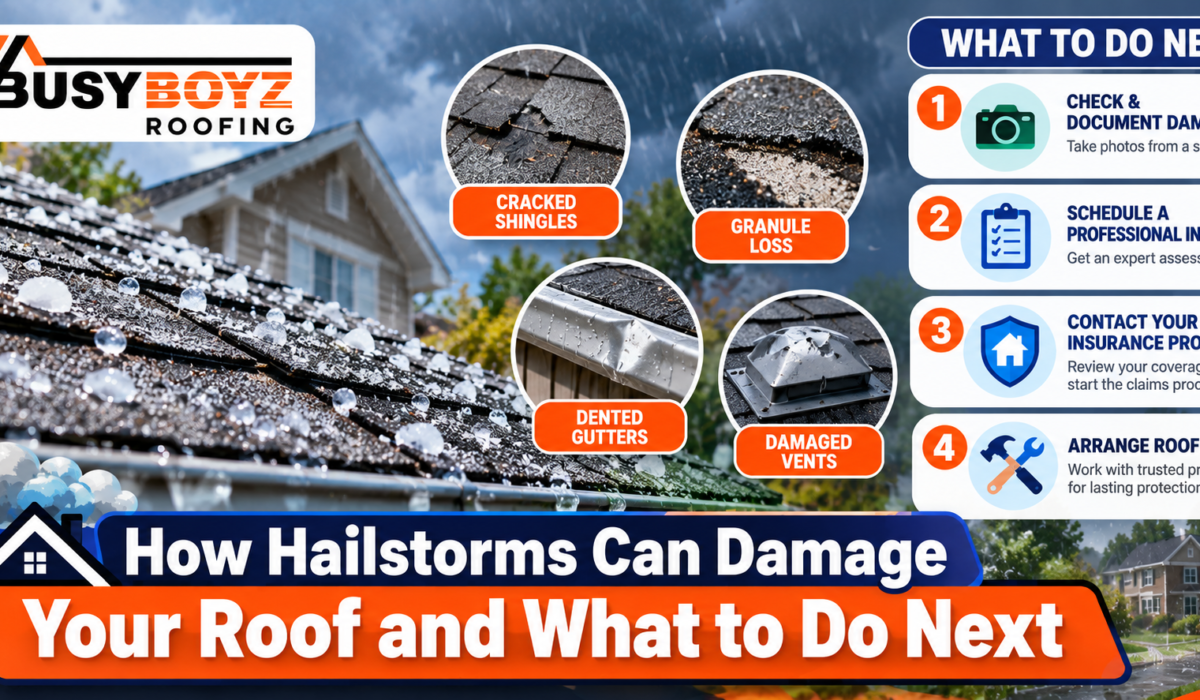
Edmonton homeowners are familiar with changing weather conditions. While winter snow and freezing temperatures create roofing challenges, summer thunderstorms can also cause significant property damage. One major concern during severe storms is hail.
Even a short hailstorm can leave behind damaged shingles, dented gutters, cracked roof components, and hidden moisture problems. However, not all hail damage is immediately visible. Some problems may only become noticeable weeks or months after the storm.
Understanding how hailstorms affect roofing systems helps homeowners take the right steps to protect their properties.
When damage occurs, contacting experienced Roofing Contractors Edmonton is an important step toward identifying problems and planning appropriate repairs.
Busy Boyz Roofing serves the Edmonton market and understands the importance of maintaining residential roofing systems. This guide explains how hail damages roofs, which warning signs homeowners should look for, and what to do after a hailstorm.
1. How Do Hailstorms Damage Residential Roofs?
Hail forms during thunderstorms when strong air currents carry water droplets into extremely cold areas of storm clouds. These droplets freeze and grow as additional layers of ice collect around them.
When hailstones become heavy enough, they fall toward the ground and can strike roofs, vehicles, windows, and other outdoor surfaces.
The amount of roof damage depends on several factors, including hailstone size, wind speed, storm duration, roofing material, and the existing condition of the roof.
Impact Damage to Asphalt Shingles
Asphalt shingles are common residential roofing materials. They contain protective granules that help shield the underlying asphalt from sunlight and weather exposure.
When hailstones strike shingles, they may cause:
- Cracked or fractured shingles.
- Bruised or weakened shingle surfaces.
- Loss of protective granules.
- Damage around shingle edges.
- Exposed underlying roofing materials.
Even when shingles look normal from a distance, their protective surfaces may have sustained damage.
Damage to Metal Roofing Components
Metal roofing is generally durable, but hail can still leave dents or surface damage depending on the metal type, thickness, and impact conditions.
Hail may also damage metal flashing, roof vents, gutters, and other exposed components.
Damage to Roof Flashing and Vents
Flashing protects vulnerable areas where the roof connects with chimneys, walls, skylights, and other structures.
Hail impacts can damage exposed components or worsen existing weaknesses. Damaged flashing may allow water to enter the roofing system.
Important: Not every dent or cosmetic mark means a roof has lost its ability to protect a home. A professional assessment helps determine whether the damage affects roofing performance.
2. Common Signs of Hail Damage on Your Roof
After a severe hailstorm, homeowners should look for visible warning signs around their properties.
However, avoid climbing onto the roof to check for damage. Roofing surfaces can become slippery, unstable, or dangerous after severe weather.
Missing or Cracked Shingles
Hail impacts may crack shingles or contribute to existing shingle deterioration.
Look for missing pieces, uneven roofing surfaces, or visible damage from a safe ground-level position.
Granule Loss
Asphalt shingles contain small mineral granules that protect the roofing surface.
Significant granule loss may expose the underlying asphalt to weather and sunlight.
You may notice unusual quantities of roofing granules in gutters or at downspout outlets. However, granule loss can also result from normal aging, so it should not automatically be treated as proof of hail damage.
Dented Gutters and Downspouts
Metal gutters and downspouts may show dents after hail impacts.
Although gutter damage does not automatically mean the roof is damaged, it can be a reason to arrange a broader exterior inspection.
Damaged Roof Vents and Flashing
Check visible roof vents, chimney flashing, metal edges, and other exposed components.
Dents, loose sections, or damaged seals may indicate that the property experienced hail impacts.
Water Stains Inside the Home
Some roofing damage allows moisture to enter the attic or ceiling.
Watch for:
- Brown or yellow ceiling stains.
- Damp attic insulation.
- Peeling interior paint.
- Dripping water.
- Musty odours.
- Visible moisture around ceiling fixtures.
These signs require prompt attention because water intrusion can damage interior materials and contribute to mould growth.
3. What to Do Immediately After a Hailstorm
Taking the right steps after a hailstorm can help protect your home and simplify the repair process.
Homeowners should focus on safety, documentation, and professional assessment.
Step 1: Check Your Property From a Safe Location
Once the storm has passed, look around your property for visible damage.
Check the following areas:
- Roof edges visible from the ground.
- Gutters and downspouts.
- Siding and exterior walls.
- Window screens.
- Garage doors.
- Outdoor structures.
- Shingles or roofing debris on the ground.
Do not climb ladders or walk across the roof.
Step 2: Take Photographs and Videos
Document visible damage before cleanup or repairs begin.
Take photographs of damaged gutters, fallen shingles, exterior surfaces, and any visible water stains.
Record the approximate date and time of the storm.
These records may help when discussing the damage with your insurance provider and roofing contractor.
Step 3: Check the Attic for Water Intrusion
If you can safely access your attic, look for signs of moisture.
Check for wet insulation, water stains, damp wood, or visible dripping.
Avoid touching wet electrical components or entering areas that appear structurally unsafe.
If you find active water intrusion, arrange professional assistance promptly.
Step 4: Contact Your Insurance Provider
Review your home insurance policy and contact your insurer to understand the claims process.
Ask about:
- Storm and hail damage coverage.
- Deductibles.
- Claim documentation.
- Inspection requirements.
- Repair authorization.
- Relevant claim deadlines.
Coverage depends on your individual policy, exclusions, and circumstances.
Step 5: Arrange a Professional Roof Inspection
Contact experienced Roofing Contractors Edmonton to assess the condition of your roofing system.
A professional inspection can help identify visible and less obvious damage.
The contractor can explain whether the roof needs minor repairs, more extensive restoration, or replacement.
4. Why Professional Roof Inspection Edmonton Matters
Not all hail damage is visible from the ground.
A roof may appear normal while certain shingles, flashing components, or protective surfaces have experienced impact damage.
A professional Roof Inspection Edmonton helps homeowners understand the actual condition of their roofing system.
Identifies Hidden Roofing Problems
Experienced roofing professionals know where hail damage commonly occurs.
They can examine shingles, roof valleys, flashing, vents, ridges, and other exposed components.
Helps Determine Repair Requirements
Not every hailstorm requires a complete roof replacement.
Depending on the damage, a contractor may recommend:
- Replacing individual damaged shingles.
- Repairing affected flashing.
- Replacing damaged vents.
- Repairing metal roofing components.
- Addressing related moisture problems.
- Replacing larger sections of roofing.
Provides Useful Documentation
A written inspection report and clear photographs can help homeowners understand the observed damage.
These records may also support discussions with an insurance adjuster.
However, the insurer makes the final decision regarding coverage under the policy.
Why it matters: A professional inspection helps homeowners make informed decisions rather than paying for unnecessary work or overlooking important damage.
5. Can Hail Damage Cause Roof Leaks?
Yes. Hail damage can contribute to roof leaks when impacts weaken or break protective roofing components.
However, a roof does not always begin leaking immediately after a storm.
Some damage allows moisture to enter gradually, making early identification important.
How Hail Damage Leads to Water Intrusion
Hail may crack shingles, damage flashing, or weaken seals around roof penetrations.
When rain or melting snow reaches these areas, water may move beneath the roofing surface.
Over time, moisture can affect roof decking, insulation, ceilings, and interior walls.
Warning Signs of a Roof Leak
Watch for:
- Water stains on ceilings.
- Damp patches in the attic.
- Dripping during rainfall.
- Peeling paint.
- Damaged insulation.
- Musty indoor smells.
If water enters your home, protect belongings and use containers to collect dripping water when safe.
Do not touch electrical equipment near wet areas.
For active leaks, arrange professional Roof Repair Edmonton as soon as possible.
Related reading: [Link: 7 Warning Signs Your Edmonton Home Needs Roof Repair].
6. Hail Damage Roofing Edmonton: Repair or Replace?
One of the biggest questions homeowners face after a hailstorm is whether their roof needs repairs or a complete replacement.
The answer depends on the extent, location, and severity of the damage.
When Minor Roof Repairs May Be Enough
Targeted repairs may be suitable when:
- Damage affects a limited number of shingles.
- Flashing has isolated damage.
- Roof vents require replacement.
- The surrounding roofing materials remain in good condition.
- The roof structure has no significant underlying problems.
A professional contractor should confirm whether the proposed repairs will restore the roof’s protective function.
When Roof Replacement May Be Necessary
A complete replacement may be considered when:
- Damage affects a large portion of the roof.
- Multiple roofing sections have significant damage.
- Existing shingles are already near the end of their useful life.
- The roof has widespread deterioration.
- Repairing individual areas would not provide a reliable long-term solution.
Factors That Influence the Decision
Roofing contractors generally consider:
- The age of the existing roof.
- The type of roofing material.
- The extent of hail impact damage.
- Existing installation problems.
- The condition of the roof deck.
- The cost and practicality of repairs.
- Manufacturer requirements and product availability.
Homeowners should request a clear explanation of the recommended work before approving a major roofing project.
7. Understanding the Hail Damage Insurance Claims Process
Home insurance may cover certain types of sudden hail damage, but coverage depends on policy wording and applicable exclusions.
Homeowners should review their policy and follow their insurer’s instructions.
Document the Damage
Keep photographs and videos of visible damage.
Record when the hailstorm occurred and note any leaks or interior damage discovered afterward.
Obtain a Professional Roofing Assessment
A roofing contractor can inspect the roof and document observed damage.
Ask for a written estimate that explains the recommended work and materials.
Coordinate With Your Insurance Adjuster
Your insurer may arrange an inspection with an adjuster.
Provide relevant photographs, contractor reports, and other requested information.
The adjuster evaluates the claim according to the insurance policy.
Review the Repair Estimate Carefully
Before starting work, understand what the estimate includes.
Check the material specifications, labour, disposal, flashing, underlayment, and any additional repairs.
Do not assume that every recommended roofing upgrade will be covered by insurance.
Important: Avoid signing unclear agreements or paying large upfront amounts without understanding the contractor’s terms and the insurance process.
8. How Professional Roofing Contractors Edmonton Help After Hailstorms
Working with experienced Roofing Contractors Edmonton can make the post-storm repair process easier to understand.
Professional roofers can assess the roofing system and recommend practical solutions based on its actual condition.
Detailed Roof Damage Assessment
A contractor can inspect shingles, flashing, gutters, roof vents, and other components for signs of impact damage.
Suitable Repair Recommendations
The contractor can explain which components require attention and whether localized repairs are appropriate.
Quality Roofing Materials
Experienced contractors can help homeowners compare suitable replacement materials.
Material selection should consider the roof structure, product specifications, weather exposure, and budget.
Proper Installation and Cleanup
Professional installation helps ensure that replacement components fit the existing roofing system correctly.
Homeowners should also confirm that the contractor includes site cleanup and disposal in the project estimate.
9. How to Protect Your Roof From Future Hailstorms
Homeowners cannot prevent hailstorms, but regular maintenance and suitable roofing materials can help reduce certain risks.
Maintain Your Roofing System
Arrange periodic roof inspections to identify aging shingles, loose flashing, and other weaknesses.
Addressing existing problems can help maintain the roof’s protective performance.
Keep Gutters Clear
Clean gutters and downspouts allow rainwater to drain away from the home.
Blocked drainage systems can contribute to moisture problems around the roof and exterior walls.
Consider Impact-Resistant Roofing Materials
Some roofing products are designed and tested for impact resistance.
For example, certain asphalt shingles carry a UL 2218 impact-resistance classification.
However, an impact-resistance rating does not guarantee that a roof will remain undamaged during every hailstorm.
Ask your roofing contractor about product testing, installation requirements, warranty conditions, and suitability for your home.
Inspect the Roof After Severe Weather
After significant hail or wind events, check your property from the ground.
If you notice damage or suspect a problem, arrange a professional inspection.
10. Why Edmonton Homeowners Should Pay Attention to Hail Damage
Edmonton experiences seasonal thunderstorms that can bring hail, strong winds, and heavy rainfall.
These conditions can affect residential roofs, particularly when roofing materials are aging or existing installation weaknesses are present.
Summer storms can also create multiple property concerns at once.
For example, a single storm may damage shingles, gutters, siding, windows, and outdoor structures.
Prepare Your Roof Before Storm Season
Consider arranging an inspection to identify existing roofing problems.
Check gutters, downspouts, visible flashing, and other exterior components.
Respond Quickly After Severe Weather
Do not ignore damaged shingles, ceiling stains, or suspected leaks.
Early assessment helps homeowners understand the extent of the damage and plan suitable repairs.
Work With Local Roofing Professionals
Homeowners searching for Hail Damage Roofing Edmonton services should choose contractors who understand residential roofing systems and local weather conditions.
Busy Boyz Roofing serves the Edmonton market and is a local roofing business homeowners can contact to discuss roofing concerns and potential repair needs.
11. Choosing the Right Contractor for Hail Damage Repairs
Choosing the right contractor is an important part of protecting your home after a hailstorm.
Homeowners should compare more than just the quoted price.
Check Experience and References
Ask about the contractor’s residential roofing experience and previous storm-damage projects.
Request references or examples of completed work where available.
Verify Insurance and Safety Practices
Ask for proof of appropriate liability insurance and applicable Alberta workers’ compensation coverage.
Confirm that the contractor follows proper fall-protection and workplace safety practices.
Request a Detailed Written Estimate
The estimate should clearly describe:
- The affected roofing areas.
- Recommended repairs or replacement.
- Roofing materials.
- Labour costs.
- Disposal arrangements.
- Project timeline.
- Warranty terms.
Avoid High-Pressure Sales Tactics
Be cautious of contractors who demand immediate signatures or promise guaranteed insurance approval.
A trustworthy roofing professional should explain the work clearly and allow you time to review the agreement.
Frequently Asked Questions
Q1. How can I tell if my roof has hail damage?
You may notice cracked or missing shingles, unusual granule accumulation, dented gutters, damaged roof vents, or water stains inside your home. However, some hail damage is difficult to identify from the ground. A professional roof inspection can help determine whether your roofing system needs repairs.
Q2. Should I get a roof inspection after every hailstorm?
A roof inspection is especially advisable after a significant hailstorm if you notice visible exterior damage, roofing debris, or signs of water intrusion. Not every storm causes roof damage, but a professional assessment can help identify hidden problems before they develop into more serious leaks.
Q3. Does homeowners insurance cover hail damage to roofs?
Homeowners insurance may cover sudden hail damage, depending on the policy’s terms, exclusions, deductible, and circumstances. Contact your insurance provider to understand your coverage and claim requirements. Document visible damage and obtain a professional roofing assessment to help support the claims process.
Q4. How quickly should I repair hail damage to my roof?
You should arrange an assessment as soon as reasonably possible after discovering suspected hail damage. Active leaks and exposed roofing areas require prompt attention to prevent additional water intrusion. Even when damage appears minor, a professional inspection can help determine the appropriate repair timeline.
Q5. Can hail damage require a complete roof replacement?
Yes, severe or widespread hail damage can make complete roof replacement necessary. However, many roofs only require targeted repairs. A professional contractor evaluates the roofing material, damage extent, existing roof condition, and repair practicality before recommending replacement.
Conclusion
Hailstorms can cause different types of residential roofing damage, from cracked shingles and granule loss to damaged flashing and water intrusion.
Although some problems are easy to notice, others remain hidden until moisture enters the home.
Taking the right steps after a storm is essential. Check your property from a safe location, photograph visible damage, contact your insurance provider, and arrange a professional roof inspection.
Experienced Roofing Contractors Edmonton can help identify roofing problems and recommend suitable solutions based on the condition of your property.
Whether you need a minor repair, a detailed inspection, or a complete roof replacement, addressing hail damage promptly can help protect your home and prevent further complications.
Busy Boyz Roofing is a local roofing company serving the Edmonton market. Contact the team to discuss your residential roofing concerns and explore appropriate roofing solutions.
Call Busy Boyz Roofing today to discuss your roofing needs and take the next step toward protecting your home after a hailstorm.