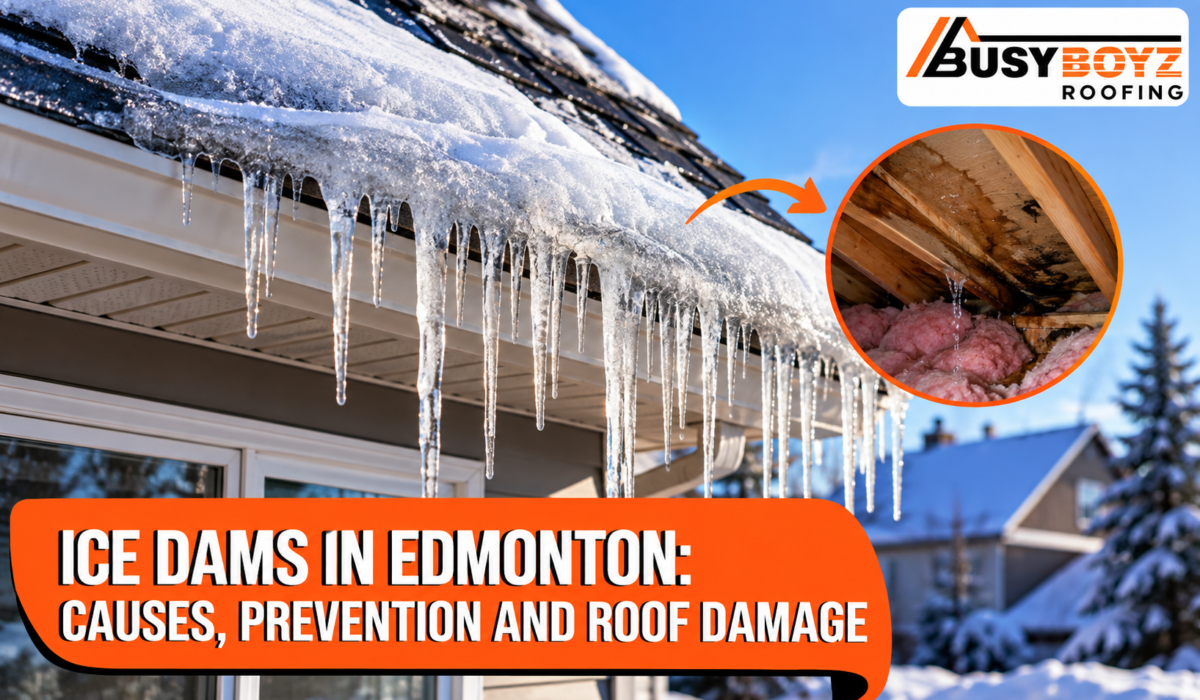
Edmonton winters can be tough on residential roofing systems. Heavy snowfall, freezing temperatures, wind, and repeated temperature changes can create conditions that allow ice dams to develop.
An ice dam is a ridge of ice that forms near the lower edge of a roof. It can prevent melted snow from draining normally. When water becomes trapped behind the ice, it may find pathways underneath shingles, flashing, or other roofing components.
This is why homeowners should understand the connection between ice dams and Ice Dam Roof Damage Edmonton properties can experience.
The good news is that many ice-dam problems can be reduced through proper roof maintenance, attic insulation, ventilation, and early intervention.
For Edmonton homeowners, recognizing the warning signs early can help prevent a small winter roofing problem from becoming a major repair.
What Is an Ice Dam?
An ice dam is a buildup of frozen water that develops along the colder edges of a roof.
The process usually begins with uneven roof temperatures.
Warm air from the living space can enter the attic if the home’s insulation or air sealing is inadequate. That heat warms sections of the roof deck. Snow above the warmer area melts and flows toward colder roof edges.
When the water reaches a colder section, it can freeze.
Over time, additional melting and freezing can create a larger ridge of ice. This ridge can block normal drainage and cause water to accumulate behind it.
How an Ice Dam Forms
The process can be summarized in four steps:
- Snow accumulates on the roof.
- Heat escapes into the attic and warms part of the roof.
- Snow melts and water flows toward colder roof edges.
- The water freezes and creates an ice barrier.
The cycle can continue as long as snow, heat loss, and freezing temperatures remain present.
What Causes Ice Dams in Edmonton?
Ice dams rarely have just one cause. Several conditions can work together to create them.
Poor Attic Insulation
Insufficient insulation allows indoor heat to move into the attic.
A properly insulated attic helps separate heated living areas from the roof deck. Without enough insulation, warm air can heat portions of the roof and contribute to uneven snow melting.
Improving attic insulation can therefore be an important part of an ice-dam prevention strategy.
Air Leakage Into the Attic
Even when insulation levels are reasonable, air leaks can allow warm indoor air to reach the attic.
Common leakage points include:
- Attic hatches
- Plumbing penetrations
- Electrical fixtures
- Duct openings
- Chimney areas
- Recessed lights
- Wall-top plates
Air sealing these areas can reduce unwanted heat and moisture movement.
Poor Attic Ventilation
Attic ventilation helps move air through the attic space and manage heat and moisture.
A roof ventilation system may include intake vents near the eaves and exhaust ventilation near the roof ridge.
However, ventilation should be designed as part of the overall roof and attic system. Adding vents without addressing air leakage or insulation problems may not solve the underlying cause.
Heavy Snowfall
A substantial snow layer provides the material that can melt and refreeze.
Snow itself does not automatically create an ice dam. However, when snow combines with uneven roof temperatures and freezing conditions, the risk increases.
Edmonton’s Freeze-Thaw Conditions
Repeated changes between freezing and above-freezing temperatures can encourage melting and refreezing.
This makes winter weather an important consideration when planning Winter Roof Damage Edmonton prevention.
How Ice Dams Cause Roof Damage
Ice dams can create several types of problems.
Water Can Back Up Under Shingles
Roofing systems are designed to move water downward and away from the building.
An ice dam interrupts this normal drainage. Water trapped behind the ice can potentially move underneath roofing materials.
This can contribute to moisture entering the roof assembly.
Attic Insulation Can Become Wet
If water reaches the attic, insulation may become damp.
Wet insulation can lose some of its effectiveness and may contribute to moisture-related problems if it remains wet.
A professional assessment can determine whether insulation or other attic components have been affected.
Ceilings and Walls Can Develop Water Damage
One of the most noticeable signs of an ice-dam-related leak is a water stain on an interior ceiling or wall.
You may also notice:
- Peeling paint
- Damp drywall
- Brown or yellow stains
- Dripping water
- Musty odors
- Wet attic insulation
Do not assume that a small stain means a small problem. Water can travel along building materials before becoming visible.
Roofing Materials May Be Damaged
Ice movement, repeated freezing and thawing, and attempts to remove ice with sharp tools can damage shingles and other roof components.
This is one reason homeowners should avoid aggressively breaking apart ice dams themselves.
Signs You May Have an Ice Dam
Recognizing an ice dam early can help you respond before serious damage develops.
Large Icicles Along Roof Edges
Icicles alone do not prove that an ice dam exists. However, unusually large or widespread icicles can indicate that snowmelt is refreezing at the roof edge.
Thick Ice Along Gutters
A continuous ridge of ice along the gutter or roof edge can indicate restricted drainage.
Water Stains Inside the Home
Ceiling or wall stains during winter are an important warning sign.
Uneven Roof Snow
If some roof areas are consistently clear while other sections remain covered with snow, the pattern may indicate uneven heat loss.
This does not automatically mean an ice dam exists, but it can justify further investigation.
Damaged or Loose Shingles
Ice-related movement or improper ice removal can damage shingles.
If you notice damaged roofing materials after winter weather, consider a professional Roof Repair Edmonton inspection.
How to Prevent Ice Dams in Edmonton
Prevention starts with controlling heat and moisture movement.
Improve Attic Insulation
Adequate attic insulation helps reduce heat transfer from the home’s living space into the attic.
The appropriate insulation level depends on the building, climate zone, existing construction, and applicable standards.
A professional assessment can identify areas where insulation is missing, compressed, or uneven.
Air Seal the Attic
Air sealing addresses pathways through which warm indoor air can enter the attic.
This is particularly important around penetrations and attic access points.
Insulation and air sealing serve different purposes, so one should not automatically be treated as a substitute for the other.
Maintain Proper Ventilation
A properly designed ventilation system can help manage attic temperature and moisture.
However, homeowners should avoid blocking existing ventilation pathways with insulation. Eave and soffit areas need to remain properly ventilated where the roof system requires them.
Keep Gutters and Downspouts Clear
Blocked drainage can make winter water management more difficult.
Clean gutters before winter and check them after major storms when conditions are safe.
Downspouts should also direct water away from the home’s foundation.
Schedule Preventive Roof Inspections
A professional inspection before winter can identify vulnerable areas.
This may include checking:
- Shingles
- Flashing
- Roof penetrations
- Gutters
- Roof edges
- Attic ventilation
- Visible moisture damage
Preventive maintenance can be especially useful for older roofing systems.
What Should You Do If an Ice Dam Already Exists?
If you see a substantial ice dam, avoid trying to remove it aggressively.
Do not use an axe, hammer, shovel, or other sharp tool to break the ice. These methods can damage shingles, flashing, gutters, and roof surfaces.
Look for Interior Leaks
Check ceilings and upper walls for new water stains.
If water is actively entering the home, protect furniture and flooring while arranging professional assistance.
Avoid Climbing Onto an Icy Roof
A frozen roof can be extremely slippery.
Falls from roofs can result in serious injuries. Homeowners should leave hazardous roof access and ice removal to trained professionals.
Contact a Roofing Professional
Professional Ice Dam Repair Edmonton services can assess the situation and determine whether the problem involves ice buildup, roof damage, attic heat loss, or a combination of factors.
When Do You Need Roof Leak Repair Edmonton Services?
A professional Roof Leak Repair Edmonton inspection is appropriate when water enters your home or when visible roof damage develops.
Contact a roofing professional if you notice:
- Active roof leaks
- New ceiling stains
- Wet attic insulation
- Missing shingles
- Damaged flashing
- Sagging roof areas
- Significant ice buildup
- Water entering around roof penetrations
- Recurring winter leaks
The source of a leak is not always directly above the interior stain. Water can travel through the roof assembly before becoming visible inside the home.
Therefore, simply sealing the visible interior stain may not solve the underlying problem.
Ice Dam Damage vs. Normal Winter Roof Conditions
Not every winter roof condition requires immediate repair.
Snow covering a roof can be normal. Small icicles can also occur naturally.
The concern increases when there is evidence of restricted drainage, water intrusion, structural stress, or roofing damage.
| Condition | Potential Concern |
| Light, even snow coverage | Usually normal |
| Small isolated icicles | Monitor conditions |
| Thick ice ridge at roof edge | Possible ice dam |
| Water stains indoors | Possible roof leak |
| Wet attic insulation | Possible moisture intrusion |
| Missing shingles | Roof repair may be needed |
| Sagging roof area | Requires prompt professional assessment |
When in doubt, a professional inspection is safer than attempting to diagnose the entire roofing system from the ground.
Ice Dams and Edmonton Roofing Systems
Different roofing materials and roof designs can respond differently to winter conditions.
However, no roofing material completely eliminates the risk of ice dams.
Ice-dam prevention depends heavily on the entire building system, including:
- Roof design
- Attic insulation
- Air sealing
- Ventilation
- Roofing materials
- Flashing
- Drainage
- Snow conditions
This is why choosing a qualified Roofing Company Edmonton homeowners can rely on is important when dealing with recurring winter roof problems.
A contractor should look beyond the visible ice and consider why the ice is forming.
Local Relevance: Ice Dams in Edmonton
Edmonton homeowners should prepare their roofs for prolonged cold periods, snowfall, and temperature fluctuations.
Winter roof maintenance should begin before severe weather arrives. Fall is a good time to inspect roofing materials, clean drainage systems, review attic insulation, and address existing leaks.
After major snowfalls or significant temperature changes, homeowners should safely monitor the roof from ground level.
If thick ice develops along roof edges or water begins appearing indoors, do not wait for spring to investigate it.
Timely Ice Dam Roof Damage Edmonton repairs can help reduce the risk of moisture spreading into insulation, ceilings, walls, and structural components.
Busy Boyz Roofing can help Edmonton homeowners assess roofing concerns and determine whether professional repair or further inspection is needed.
Frequently Asked Questions
What is an ice dam and why does it form?
An ice dam is a ridge of ice that forms near the colder edge of a roof when melting snow refreezes. It commonly develops when heat escapes into the attic, warms parts of the roof, and melts snow unevenly. The resulting water can refreeze at colder roof edges and restrict drainage.
Why are ice dams dangerous for Edmonton homes?
Ice dams can prevent melted snow from draining normally and may allow water to back up beneath roofing materials. This can contribute to leaks, wet insulation, damaged shingles, ceiling stains, and moisture problems. Edmonton’s cold winters and freeze-thaw conditions can increase the opportunity for repeated melting and refreezing.
How can homeowners prevent ice dams in Edmonton?
Homeowners can reduce ice-dam risk by maintaining adequate attic insulation, sealing air leaks, supporting proper attic ventilation, and keeping roof drainage systems clear. Professional inspections can also identify roofing or attic problems before winter. Prevention should address the entire roof and attic system rather than relying on one solution.
When should I call for Ice Dam Repair Edmonton services?
Call a professional when you see substantial ice buildup, recurring roof-edge ice, interior water stains, active leaks, or signs of roof damage. Avoid climbing onto an icy roof or breaking ice with sharp tools. Professional Ice Dam Repair Edmonton services can safely assess the ice and underlying roofing conditions.
Who can repair ice-dam-related roof damage in Edmonton?
A qualified local roofing contractor can inspect the roof, identify potential ice-dam damage, and recommend appropriate repairs. Busy Boyz Roofing provides roofing assistance for Edmonton homeowners. For professional advice about ice dams, leaks, or winter roof damage, contact Busy Boyz Roofing at +1 780 709 3240.
Conclusion
Ice dams are more than an inconvenience. They can interfere with roof drainage and contribute to leaks, damaged roofing materials, wet insulation, and interior water damage.
The most effective strategy combines prevention and early action. Maintain proper attic insulation, control air leakage, support appropriate ventilation, keep drainage systems clear, and inspect your roof before winter.
If an ice dam has already formed, avoid aggressive DIY removal. Sharp tools and unsafe roof access can create additional damage or personal injury.
For Ice Dam Repair Edmonton, Roof Repair Edmonton, or Roof Leak Repair Edmonton services, professional assessment can help identify both the visible damage and the underlying cause.
Busy Boyz Roofing is ready to help Edmonton homeowners protect their roofs through the winter season. If you notice ice buildup, leaks, damaged shingles, or other signs of Winter Roof Damage Edmonton, call Busy Boyz Roofing at +1 780 709 3240 to discuss your roofing needs.