
- By busyboyzroofing
- Roofing Tips
- 0 Comment
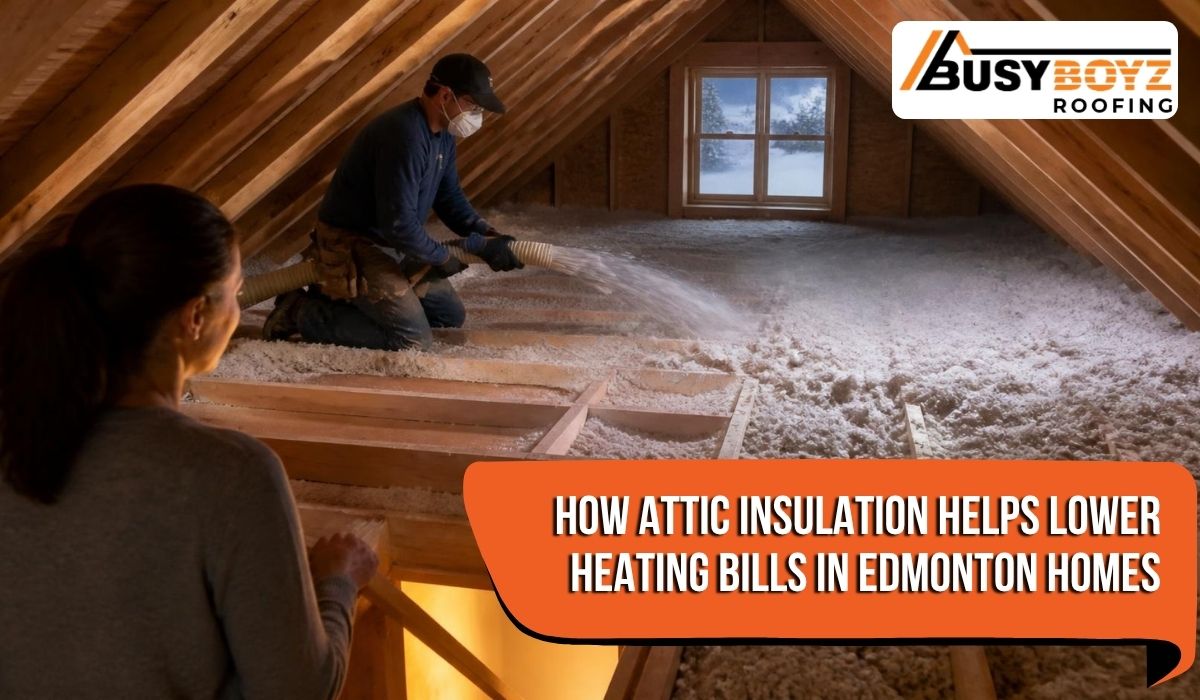
Edmonton winters can put a serious strain on a home’s heating system. As outdoor temperatures drop, your furnace works harder to maintain a comfortable indoor temperature. If your attic has inadequate or poorly performing insulation, some of that heated air can escape through the upper part of your home, making your heating system work even harder.
This is one reason attic insulation in Edmonton homes deserves attention.
Proper attic insulation helps slow heat transfer between your living space and the attic. When combined with good air sealing and appropriate attic ventilation, insulation can help improve indoor comfort and may reduce the amount of energy required to heat your home.
For Edmonton homeowners, checking attic insulation can be an important part of maintaining an energy-efficient and comfortable house, especially before and during the winter season.
Why Attic Insulation Matters in Edmonton
Heat naturally moves toward colder areas. During winter, warm indoor air can move upward toward the attic and eventually escape through areas where insulation is insufficient or where air leakage occurs.
Without adequate insulation, your home may lose heat more quickly through the ceiling and attic.
This can contribute to:
- Colder upstairs rooms
- Uneven indoor temperatures
- Longer furnace run times
- Increased heating demand
- Drafty areas
- Greater heat loss through the ceiling
- Poor winter comfort
Good insulation creates a thermal barrier that slows this heat movement.
It does not prevent all heat loss, but it can help your home retain heat more effectively.
How Does Attic Insulation Lower Heating Bills?
The basic idea is straightforward.
Your furnace heats the air inside your home. If heat escapes quickly through the attic, the furnace needs to operate more frequently to maintain the desired temperature.
Adequate attic insulation reduces the rate at which heat moves from the heated living space into the colder attic.
As a result, your home may be able to maintain indoor temperatures more efficiently.
Better Heat Retention
A properly insulated attic helps keep more of the heat generated inside the living area.
This can be particularly important during Edmonton’s coldest periods when the difference between indoor and outdoor temperatures is significant.
Reduced Heating Demand
When heat loss through the attic is reduced, the heating system may not need to run as frequently or for as long to maintain the same indoor temperature.
The actual energy savings will vary from home to home based on insulation levels, air leakage, furnace efficiency, windows, home size, thermostat settings, and other factors.
More Consistent Indoor Temperatures
Insulation is not only about lowering energy costs.
It can also contribute to more consistent temperatures throughout the house.
If upstairs rooms feel noticeably colder than downstairs areas during winter, inadequate attic insulation or air leakage may be among the factors worth investigating.
Signs Your Attic May Need More Insulation
Many homeowners do not regularly enter their attic, so insulation problems can go unnoticed.
There are several signs that may indicate it is time to have your attic evaluated.
1. Your Upstairs Rooms Feel Cold
If bedrooms or other rooms directly below the attic remain colder than the rest of the home, inadequate insulation may be contributing to the problem.
However, temperature differences can also be caused by ductwork, windows, air leakage, or heating-system issues.
A professional assessment can help identify the actual cause.
2. Your Furnace Runs Frequently
A furnace that seems to run constantly during cold weather may be responding to significant heat loss.
Insulation is only one possible factor, so homeowners should not assume that adding insulation alone will solve the issue.
Still, an attic evaluation can help determine whether the ceiling area is adequately insulated.
3. Heating Bills Are Higher Than Expected
If your heating costs seem unusually high compared with previous winters or similar homes, it may be worth looking at the home’s overall energy performance.
Possible factors include:
- Poor attic insulation
- Air leakage
- Older windows
- Door drafts
- Furnace efficiency
- Ductwork issues
- Thermostat settings
- Building-envelope problems
Attic insulation should be considered as part of the larger picture rather than as the only possible cause.
4. You Can See Areas With Thin or Missing Insulation
If insulation appears uneven, compressed, damaged, or missing in sections of the attic, those areas may provide less thermal protection.
Insulation performance can decline when materials are disturbed, compressed, wet, or improperly installed.
5. You Notice Moisture or Condensation
Moisture in an attic should not simply be covered with additional insulation.
Condensation can be associated with air leakage, ventilation issues, indoor humidity, or other building-envelope concerns.
Adding insulation without addressing the underlying moisture source may not solve the problem.
Attic Insulation and Edmonton’s Cold Winters
Edmonton experiences long, cold winters, which makes heat retention particularly important for homeowners.
During prolonged periods of below-freezing temperatures, even small areas of inadequate insulation or air leakage can contribute to heat loss.
A well-maintained attic can help create a stronger thermal boundary between the heated part of the home and the colder outdoor environment.
This is one reason homeowners should consider checking insulation and attic conditions before winter rather than waiting until heating bills increase.
For additional winter roofing information, see Edmonton winter roof problems and prevention.
Attic Insulation vs. Air Sealing
One important distinction is that insulation and air sealing perform different jobs.
Insulation
Insulation slows heat transfer.
Air Sealing
Air sealing reduces unwanted movement of air through gaps, cracks, and openings.
A home can have a large amount of insulation but still experience heat loss if warm air is escaping through unsealed openings.
Common attic air-leakage areas can include:
- Plumbing penetrations
- Electrical openings
- Attic hatches
- Recessed fixtures
- Duct penetrations
- Wall-top plates
- Other gaps between building components
For this reason, improving attic performance may involve both insulation and air sealing.
Why Attic Ventilation Also Matters
Insulation should not be considered separately from attic ventilation.
A properly functioning attic ventilation system can help manage moisture and temperature conditions within the attic space.
Poor ventilation can contribute to condensation and moisture problems, particularly when warm indoor air enters the attic.
Homeowners should avoid blocking intended ventilation pathways when adding or changing insulation.
The appropriate insulation and ventilation approach depends on the home’s design and existing roofing system.
Can More Attic Insulation Reduce Furnace Use?
Potentially, yes.
If your attic currently has inadequate insulation and substantial heat loss is occurring through the ceiling, improving insulation can reduce the rate of heat transfer.
That can reduce the heating demand required to maintain comfortable indoor temperatures.
However, it is important to avoid promises of a specific percentage reduction in heating bills without evaluating the individual home.
Actual savings depend on many variables, including:
- Existing insulation levels
- Home size
- Home age
- Air leakage
- Furnace efficiency
- Windows and doors
- Indoor temperature settings
- Weather conditions
- Energy prices
- Installation quality
A professional evaluation can provide a more realistic understanding of your home’s needs.
How Much Attic Insulation Does an Edmonton Home Need?
The appropriate insulation level depends on factors such as the home’s construction, existing insulation, insulation type, attic design, and applicable building or energy-efficiency requirements.
Homeowners should not simply add as much insulation as possible without considering the rest of the attic assembly.
Before adding insulation, it is important to check for:
- Moisture problems
- Air leakage
- Ventilation
- Damaged insulation
- Electrical concerns
- Roof-related issues
Addressing underlying problems first can help ensure that insulation improvements are part of a complete solution.
Different Types of Attic Insulation
Several insulation materials may be used in residential attics.
Common options include:
Fiberglass Insulation
Fiberglass is widely used and can be installed as batts or loose-fill material.
Cellulose Insulation
Cellulose is commonly used as blown-in insulation and can provide effective coverage when properly installed.
Spray Foam Insulation
Spray foam can provide both insulation and air-sealing properties, depending on the application and installation approach.
The best option depends on the home’s construction, existing insulation, attic configuration, budget, and project requirements.
Homeowners should have the attic evaluated before selecting a material.
How Poor Attic Insulation Can Affect Your Roof
Attic conditions can also influence the roofing system.
If warm, moist indoor air enters a cold attic and condensation develops, moisture can affect insulation, wood components, and other parts of the attic environment.
Roof ventilation and insulation therefore need to work together.
This does not mean that every roofing problem is caused by insulation. Roof leaks, flashing failures, damaged shingles, and other roofing issues have different causes.
If you suspect a roof-related problem, consider roof inspections in Edmonton to learn more about checking your roofing system.
Ice Dams and Attic Heat Loss
Ice dams can develop when heat escaping from the home warms portions of the roof while colder roof edges remain below freezing.
Meltwater can then refreeze near the colder roof edge.
Ice dams are influenced by several factors, including roof design, snow conditions, attic insulation, air leakage, and ventilation.
Improving insulation and air sealing may help reduce unwanted heat reaching the roof surface, but homeowners should not assume that insulation alone will prevent every ice-dam problem.
Proper roof maintenance and winter preparation are also important.
Attic Insulation and Summer Comfort
Although this article focuses on Edmonton heating bills, attic insulation can also be useful during warmer months.
In summer, insulation can slow the transfer of heat from a hot attic into the living space.
That may help reduce the cooling load on the home.
Therefore, attic insulation can contribute to year-round comfort rather than only providing benefits during winter.
How to Tell If Your Attic Insulation Is Performing Poorly
Homeowners can look for obvious warning signs without entering unsafe areas.
From an appropriate and safe location, you may notice:
- Uneven insulation coverage
- Compressed insulation
- Missing insulation
- Moisture
- Damp areas
- Unusual attic odors
- Frost or condensation
- Large temperature differences between rooms
Do not walk across areas of an attic that are not designed to support foot traffic.
Attics may contain electrical wiring, nails, fragile surfaces, and limited walking areas.
A professional should handle detailed attic assessments when conditions are difficult or potentially unsafe.
Should You Add New Insulation Over Existing Insulation?
Sometimes additional insulation can be installed over existing material.
However, the existing insulation should first be evaluated.
If it is wet, contaminated, severely damaged, compressed, or affected by another problem, simply adding more material may not be the appropriate solution.
The attic should also be checked for air leakage and ventilation concerns.
A proper assessment can determine whether existing insulation should remain, be supplemented, or be removed and replaced.
Common Attic Insulation Mistakes Homeowners Should Avoid
Adding Insulation Without Checking for Moisture
Moisture problems should be identified and addressed before adding insulation.
Blocking Attic Ventilation
Insulation should not be installed in a way that blocks intended ventilation pathways.
Ignoring Air Leaks
Insulation does not replace air sealing. Uncontrolled air movement can continue to contribute to heat loss.
Installing Insulation Around Unsafe Areas
Electrical components and other hazards require appropriate precautions.
Assuming More Insulation Always Means Better Performance
The complete attic assembly matters. Insulation, air sealing, ventilation, and moisture management should work together.
How Attic Insulation Fits Into Overall Roof Maintenance
Your attic and roof are connected parts of your home’s building envelope.
Roofing materials protect the structure from exterior weather, while insulation and air sealing help control heat and moisture movement between indoor and outdoor spaces.
That is why homeowners should consider both areas when maintaining their property.
Regular roof maintenance can help identify problems that may affect the attic, while attic evaluations can reveal conditions that may require attention to the roofing system.
For additional maintenance advice, see affordable roof maintenance tips.
When Should Edmonton Homeowners Check Attic Insulation?
An attic evaluation can be useful at several points.
Consider having it checked if:
- Your home is older
- Heating costs have increased significantly
- Upstairs rooms feel cold
- Your furnace runs frequently
- You notice attic moisture
- Insulation appears thin or uneven
- You are preparing your home for winter
- You are renovating the attic
- You have noticed ice-dam concerns
- You suspect excessive heat loss
Checking before winter can be especially helpful because it provides time to address issues before Edmonton’s coldest weather arrives.
Can Roof Replacement Improve Attic Performance?
A roof replacement project can sometimes provide an opportunity to evaluate components around the roof and attic.
However, replacing the roof does not automatically solve insulation or air-sealing problems.
These are separate considerations that should be evaluated as part of the overall building envelope.
If your roof is aging while you are also experiencing attic or heating concerns, a professional assessment can help determine which improvements are appropriate.
For information about residential roofing options, see residential roofing in Edmonton.
Why Professional Assessment Matters
Attic insulation may look like a simple home-improvement project, but the attic contains several systems that need to work together.
A professional can help identify whether your home has:
- Insufficient insulation
- Air leakage
- Moisture problems
- Ventilation concerns
- Roofing issues
- Damaged insulation
- Other building-envelope conditions
This helps prevent homeowners from spending money on an insulation upgrade that does not address the actual source of heat loss.
Frequently Asked Questions About Attic Insulation in Edmonton
Does attic insulation help lower heating bills in Edmonton?
Adequate attic insulation can reduce heat transfer through the ceiling and may lower the amount of energy needed to maintain indoor temperatures. Actual savings depend on the home’s existing insulation, air leakage, heating system, weather, and other factors.
How does attic insulation keep a house warmer?
Attic insulation slows the movement of heat from the heated living space toward the colder attic. This can help the home retain heat more effectively during winter.
How do I know if my attic needs more insulation?
Cold upstairs rooms, high heating demand, uneven insulation, visible thin areas, and attic temperature or moisture concerns may indicate that an evaluation is worthwhile.
Should I add insulation before winter?
Checking attic insulation before winter can be beneficial because it gives homeowners time to identify and address insulation, air-sealing, or ventilation concerns before extremely cold weather arrives.
Can attic insulation prevent ice dams?
Improving insulation and air sealing may help reduce heat escaping into the attic and warming the roof surface. However, ice dams can have multiple contributing factors, so insulation alone cannot guarantee prevention.
Does attic insulation help in summer?
Yes. Insulation can slow heat transfer from a hot attic into the living space, potentially improving indoor comfort during warmer weather.
Can I install attic insulation myself?
Some insulation projects may be suitable for experienced homeowners, but attics can contain electrical hazards, limited walking areas, moisture problems, and ventilation components. A professional assessment is advisable when the condition of the attic is uncertain.
Does attic insulation fix a roof leak?
No. Insulation does not repair a damaged roof. If water is entering the attic, the source of the leak should be identified and repaired before insulation is added or replaced.
Should attic insulation be checked with the roof?
It can be useful to consider both together because roofing, attic ventilation, insulation, and air sealing can affect the overall performance of the building envelope.
Improve Your Home’s Comfort Before Edmonton Winter
Attic insulation is an important part of maintaining a comfortable and energy-conscious home in Edmonton.
When insulation is inadequate, heat can escape more easily through the ceiling, potentially increasing heating demand during cold weather. Improving insulation—along with addressing air leakage, ventilation, and moisture concerns—can help create a better-performing attic system.
If your upstairs rooms are cold, your furnace seems to run constantly, or your heating costs have increased, an attic assessment may be a worthwhile step.
Regular attention to both the attic and roof can also help identify problems before they become more expensive.
Talk to Busy Boyz Roofing
If you have concerns about your roof, attic conditions, winter preparation, or residential roofing system, Busy Boyz Roofing Ltd can help you determine the appropriate next step.
Busy Boyz Roofing Ltd
1101 77 Ave NW, Edmonton, AB T6B 2J5, Canada
Phone: +1 780-709-3240
Email: busyboyzroofing@gmail.com
Hours: Monday–Friday: 9:00 AM–5:00 PM | Saturday: 9:00 AM–2:00 PM
Have questions about your roof or attic before the next Edmonton winter? Contact Busy Boyz Roofing today to discuss your roofing needs.