
- By busyboyzroofing
- Roofing Tips
- 0 Comment
A roofing emergency can happen without warning. A severe Edmonton storm may damage shingles, strong winds can expose part of a roof, or melting snow and ice can contribute to water entering your home. When something goes wrong, homeowners often want to act quickly—but rushing onto the roof or attempting an unfamiliar repair can create additional risks.
Knowing what to do during a roofing emergency can help protect your family, reduce property damage, and make it easier for a professional roofing contractor to address the problem.
For Edmonton homeowners, having a basic emergency plan is especially important because changing weather conditions can place significant stress on residential roofing systems. Whether you are dealing with an active roof leak, storm damage, missing shingles, or sudden water intrusion, safety should always come first.
What Is a Roofing Emergency?
A roofing emergency is a situation where sudden or significant roof damage could allow water into the home, create a safety hazard, or cause additional property damage if it is not addressed promptly.
Common roofing emergencies include:
- Active roof leaks
- Major storm damage
- Missing or severely damaged shingles
- Roof sections damaged by high winds
- Water entering through the ceiling
- Damaged flashing around roof openings
- Fallen branches affecting the roof
- Significant damage after hail or severe weather
- Sudden roof deterioration that exposes the interior
Not every roofing problem requires emergency service. However, when water is actively entering your home or the roof has suffered substantial damage, prompt professional attention is important.
If you are dealing with an urgent leak, you can learn more about emergency roof leak repair in Edmonton.
1. Keep Everyone Away From the Damaged Area
Your first priority during a roofing emergency should be personal safety.
If there is visible roof damage, falling debris, water coming through the ceiling, or signs that part of the roofing system has become unstable, keep family members and pets away from the affected area.
Do not stand directly underneath damaged sections of the ceiling or roof if you suspect structural problems.
If water is entering a room, move furniture, electronics, and other valuable belongings away from the affected area when it is safe to do so.
A roofing emergency is not the time to take unnecessary risks.
2. Do Not Climb Onto the Roof During Dangerous Weather
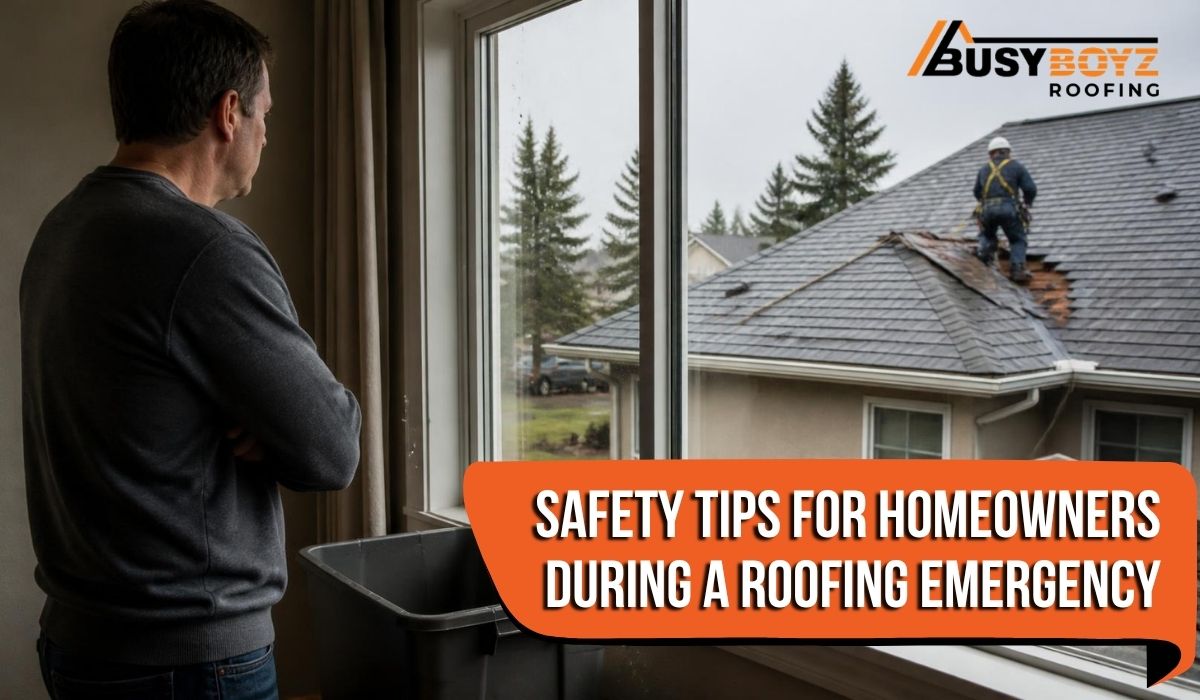
One of the most important roofing emergency safety tips is to avoid climbing onto the roof during a storm or immediately afterward if conditions remain unsafe.
Wet shingles can be slippery. Strong winds can affect your balance, and hidden damage may make certain areas of the roof unstable.
Ice and snow create additional hazards during Edmonton winters.
Even if you can see the damaged area, getting onto the roof yourself may expose you to unnecessary injury.
Instead, observe the situation from a safe location and contact a professional roofing contractor.
3. Place Containers Under Active Leaks
If water is entering through the ceiling and it is safe to remain in the room, place buckets or containers underneath the dripping water.
This can help collect water temporarily and reduce the amount reaching your floors and furniture.
However, containers are only a temporary measure. They do not solve the underlying roofing problem.
If the leak is spreading or the ceiling appears swollen, sagging, or severely damaged, keep people away from the area and seek professional assistance.
4. Protect Your Belongings When Possible
Water damage can affect more than the roof.
Once water enters the home, it may damage:
- Furniture
- Flooring
- Drywall
- Electronics
- Insulation
- Personal belongings
- Electrical components
If it is safe to do so, move valuable belongings away from the affected area.
Avoid handling electrical equipment or switches if water is present nearby. Electrical hazards should be treated seriously, and homeowners should not attempt electrical work unless they are appropriately qualified.
The goal is to limit secondary damage without putting yourself at risk.
5. Be Careful Around Electrical Hazards
Water and electricity can create a dangerous combination.
If a roof leak is occurring near light fixtures, outlets, electrical panels, appliances, or wiring, do not touch wet electrical equipment.
Do not assume that a small amount of water is harmless.
If you suspect an electrical hazard, stay away from the area and contact an appropriately qualified professional or emergency service as needed.
Roofing repairs should never take priority over immediate personal safety.
6. Do Not Attempt Major Roof Repairs Yourself
A roofing emergency can create pressure to fix the problem immediately.
However, homeowners should avoid attempting major repairs without the proper experience, equipment, and safety precautions.
Climbing ladders, walking on damaged roofing materials, handling exposed roofing components, or working near unstable sections can result in serious injuries.
Instead of attempting a major repair, contact a professional roofing contractor who can assess the condition and determine the appropriate solution.
For non-emergency roofing concerns, you can also explore roof repair in Edmonton.
7. Document the Damage From a Safe Location
If possible, take photographs or videos of the visible damage without placing yourself in danger.
Useful documentation may include:
- Missing shingles
- Visible roof damage
- Water stains
- Interior ceiling damage
- Damaged walls
- Fallen branches
- Water entering the home
- Storm-related damage
Photographs can help you keep a record of the situation and may also be useful when discussing the damage with your roofing contractor or insurance provider.
Do not climb onto the roof simply to obtain a better photograph.
8. Contact a Professional Roofing Contractor Quickly
Once everyone is safe, contact a qualified roofing contractor to assess the damage.
A professional can determine:
- Where the damage occurred
- Whether water is entering the roofing system
- Whether temporary protection is needed
- Whether repairs are possible
- Whether additional areas need inspection
- Whether the roof may require replacement
A prompt professional assessment can help prevent a relatively contained problem from becoming more extensive.
Busy Boyz Roofing serves Edmonton and surrounding communities with residential and commercial roofing services.
9. Understand the Difference Between Temporary and Permanent Repairs
During an emergency, the first objective may be to stop or reduce further damage.
Depending on the situation, a roofing contractor may recommend a temporary measure until permanent repairs can be completed.
Temporary protection can be useful when weather conditions, material availability, or the extent of damage makes immediate permanent repair impractical.
However, homeowners should understand that temporary measures are not necessarily a long-term solution.
For a better understanding of the difference, read temporary vs. permanent roof repairs.
10. Do Not Ignore a Small Roof Leak
A small leak may appear manageable, particularly if water only enters during heavy rain.
However, even a minor leak can indicate a problem with shingles, flashing, roof penetrations, drainage, or another component of the roofing system.
Water can also travel before becoming visible inside your home.
This means the location of an interior water stain is not always the exact location of the roof problem.
If you notice repeated water stains, damp areas, or signs of moisture, arrange a professional assessment instead of simply covering the stain or waiting for it to disappear.
You can also review roof leak repair in Edmonton: quick fixes for more information about responding to roof leaks.
11. Watch for Ceiling and Attic Warning Signs
Roofing emergencies do not always begin with visible water dripping into a room.
You may first notice:
- Brown or yellow ceiling stains
- Peeling paint
- Damp insulation
- Musty smells
- Moisture in the attic
- Mold-like growth
- Warped drywall
- Sagging ceilings
These signs should not be ignored.
An attic inspection may reveal moisture or ventilation-related concerns before the problem becomes more visible inside the living space.
Homeowners interested in understanding attic-related roofing concerns can read the Edmonton attic insulation guide.
12. Take Extra Precautions During Edmonton Winter
Winter roofing emergencies can be particularly challenging.
Snow and ice can make roofs and ladders extremely dangerous to access. Freezing temperatures can also make emergency conditions more difficult to manage.
Homeowners should never climb onto an icy or snow-covered roof simply to inspect damage.
Instead, remain at ground level whenever possible and contact a professional.
Winter can also create problems that become more apparent as temperatures change. Homeowners can learn more about winter roof problems and prevention in Edmonton.
13. Check for Damage After Severe Weather
After a major storm, take a visual look at your property from a safe location.
You may notice:
- Shingles in the yard
- Missing sections of roofing
- Damaged gutters
- Fallen branches
- Visible flashing damage
- Water entering the home
Do not assume the roof is undamaged simply because it looks normal from the street.
Some storm damage may be difficult to identify without a professional inspection.
For Edmonton homeowners, storm damage roof repair can provide additional information about what to consider after severe weather.
14. Know When Roof Repair May Not Be Enough
Emergency damage does not automatically mean that your entire roof needs to be replaced.
In some situations, localized repairs may address the problem.
However, extensive damage, widespread deterioration, or an aging roofing system may make replacement a more practical long-term solution.
A professional assessment should consider the overall condition of the roof rather than focusing only on the most visible damaged section.
If you are unsure whether your roof needs repair or replacement, read roof repair vs. replacement in Edmonton.
15. Avoid Unqualified Roofing Contractors
When homeowners experience an emergency, they may feel pressure to hire the first available roofer.
Availability matters during an emergency, but quality and reliability matter too.
Before hiring a roofing contractor, consider:
- Relevant roofing experience
- Local service area
- Clear communication
- Written estimates where appropriate
- Professional approach
- Appropriate qualifications and insurance
- References or established reputation
Choosing a contractor carefully can help you avoid additional problems.
For guidance, read how to choose an Edmonton roofer.
16. Keep Your Emergency Roofing Information Easy to Find
A roofing emergency is not the best time to search for a contractor for the first time.
Homeowners can prepare by keeping important information readily available, including:
- Roofing contractor contact information
- Previous roofing records
- Approximate roof age
- Previous repair information
- Insurance information
- Photos of the property
Having this information organized can make it easier to respond calmly when a roofing emergency occurs.
Common Roofing Emergency Mistakes Homeowners Should Avoid
Knowing what not to do can be just as important as knowing what to do.
Climbing onto a wet or icy roof
This creates a serious fall risk and should be avoided.
Attempting unfamiliar repairs
Improper repairs can create additional damage and may make professional repairs more difficult.
Ignoring water intrusion
Even a small leak can lead to more extensive moisture damage over time.
Waiting for the next sunny day without taking action
If water is actively entering the home, delaying assessment can increase the risk of secondary damage.
Assuming visible damage is the entire problem
Roofing damage may extend beyond the area you can see from the ground.
Hiring based only on the lowest price
During an emergency, homeowners should consider experience, professionalism, and the quality of the proposed solution—not only the initial price.
How to Prepare for a Future Roofing Emergency
You cannot prevent every roofing emergency, but preparation can make the situation easier to manage.
Consider scheduling regular roof maintenance and inspections so potential problems can be identified before they become urgent.
You can also:
- Keep gutters and drainage areas maintained
- Watch for damaged or missing shingles
- Check your attic periodically for moisture
- Pay attention to ceiling stains
- Inspect the property visually after major storms
- Keep tree branches away from vulnerable roof areas
- Know the approximate age of your roof
- Keep your roofing contractor’s contact information available
Regular maintenance can help reduce unexpected problems.
For more practical advice, see these affordable roof maintenance tips.
When Should You Call for Emergency Roofing Service?
You should consider contacting a roofing professional promptly when:
- Water is actively entering your home
- A large portion of the roof is damaged
- Strong winds have removed roofing materials
- Storm damage has exposed the roof
- A ceiling is sagging because of water
- A tree or large branch has damaged the roof
- You cannot safely determine the extent of the damage
- A roofing problem is worsening quickly
If you are experiencing an urgent roofing issue, emergency roof leak repair in Edmonton can help you understand the type of response that may be needed.
Final Thoughts: Safety Comes First During a Roofing Emergency
A roofing emergency can be stressful, but homeowners do not have to handle the situation by putting themselves at risk.
The most important steps are simple: keep people away from dangerous areas, avoid climbing onto damaged or slippery roofs, protect your belongings when it is safe, document visible damage from the ground, and contact a professional roofing contractor for assessment.
For Edmonton homeowners, preparation and regular maintenance can also reduce the likelihood of unexpected roofing problems.
If a roofing emergency does occur, remember that protecting people comes before protecting property. A professional roofing assessment can help determine whether you need an emergency repair, temporary protection, permanent repair, or a larger roofing solution.
Frequently Asked Questions About Roofing Emergencies
What should I do first during a roofing emergency?
Prioritize everyone’s safety. Keep people away from damaged areas, avoid climbing onto the roof, and move belongings away from water when it is safe. Then contact a professional roofing contractor for assessment.
Should I climb onto my roof to check storm damage?
No. Wet, damaged, icy, or unstable roofing can create serious fall and injury risks. A professional should assess the roof when conditions require closer inspection.
What should I do if water is coming through my ceiling?
If it is safe, place a container beneath the leak and move belongings away from the affected area. Avoid electrical equipment if water is nearby and contact a roofing professional promptly.
Can a small roof leak become a major problem?
Yes. A small leak can allow moisture to enter roofing materials and other parts of the home. Over time, this can contribute to damage involving insulation, drywall, wood, and interior finishes.
Is storm damage always considered a roofing emergency?
Not necessarily. The urgency depends on the severity and location of the damage. However, exposed roofing, active leaks, major structural concerns, or significant storm damage should be assessed promptly.
Can I temporarily repair my roof myself?
Homeowners should avoid climbing onto damaged roofs or attempting repairs they are not equipped or trained to perform. A professional can determine whether temporary protection is appropriate and how it should be handled safely.
How can I prepare for a roofing emergency?
Keep your roofing contractor’s contact information available, know the approximate age of your roof, maintain your roofing system regularly, and monitor your home for signs of leaks or damage.
Should I repair or replace my roof after an emergency?
It depends on the extent of the damage, the age and condition of the roofing system, and the expected remaining service life. A professional inspection can help determine the appropriate solution.
Get Help With Your Roofing Emergency
When your roof is damaged, quick action can help limit additional problems—but your safety should always come first.
Busy Boyz Roofing Ltd provides roofing services for residential and commercial properties in Edmonton and surrounding communities. Whether you need urgent leak assistance, storm-damage assessment, roof repair, or help understanding your roofing options, our team is ready to help.
Busy Boyz Roofing Ltd
1101 77 Ave NW, Edmonton, AB T6B 2J5, Canada
Phone: +1 780-709-3240
Email: busyboyzroofing@gmail.com
Hours: Monday–Friday: 9:00 AM–5:00 PM | Saturday: 9:00 AM–2:00 PM
Need urgent roofing help? Contact Busy Boyz Roofing today to discuss your roofing emergency and determine the next safe step.